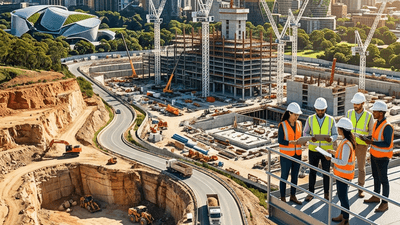
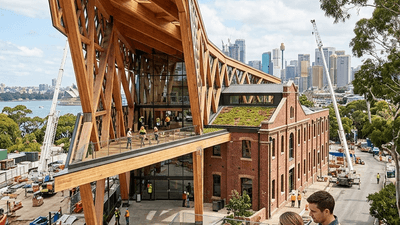
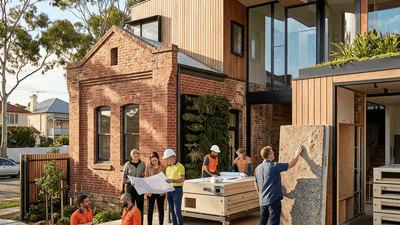
Australian architecture is currently operating across a fascinating spectrum of extremes. On one end, we are conceptualizing 30-square-meter micro-apartments to combat an escalating urban housing crisis; on the other, we are masterplanning entire regional communities to withstand catastrophic climate events. Bridging these extremes is a new generation of designers and a renewed commitment to adaptive reuse, proving that the future of Australian practice lies not in the *tabula rasa*, but in the intelligent manipulation of what already exists. This month's developments across the sector—from the recognition of emerging talent at the Vivid Awards to major planning approvals for heritage transformations in Sydney and Melbourne—highlight a maturation ...
When the New South Wales Chapter of the Australian Institute of Architects (AIA) recently convened at Sydney’s City Recital Hall, the atmosphere was charged with more than just the usual collegiate cheer. The 2026 NSW Awards Night served as a vibrant convergence of the state's brightest design minds, celebrating a year of profound architectural resilience. But for those of ...
When a transport hub claims a state’s highest architectural honour, it sends a clear message to the profession: the era of purely utilitarian infrastructure is over. We are witnessing a fundamental redefinition of what constitutes civic architecture in Australia. This shift is not occurring in isolation; it is part of a broader national movement towards design that ...
The architectural zeitgeist of 2026 isn't being defined by the tallest tower or the glossiest facade. Instead, as the latest round of state architecture awards and urban appointments reveals, the Australian industry is experiencing a profound pivot toward what we might call 'civic generosity'. When a regional health facility sweeps a state architecture awards program, taking ...
Australian architecture is undergoing a profound recalibration. For the past decade, the national discourse has often been dominated by the sheer scale of mega-projects and the race for global aesthetic relevance. However, a new paradigm is quietly taking hold across the country—one that prioritizes profound social impact, data-driven pragmatism, and a renewed commitment to ...
Brisbane’s urban fabric is undergoing a metamorphosis, driven by the looming deadline of the 2032 Olympic Games and a broader national push toward climate-responsive, precinct-scale living. For Australian architects, the challenge is no longer just designing singular landmark buildings; it is about orchestrating vast urban transitions while maintaining the nuanced, passive ...
Architecture in 2026 is rapidly shedding its passive skin. Across Australia, we are witnessing a decisive pivot from traditional, observational modes of practice toward highly active, participatory engagement. This shift is redefining everything from how architects specify materials and navigate government tenders, to how massive urban precincts are governed and delivered. ...
Architecture is inherently a balancing act—between form and function, budget and ambition, public good and private interest. But right now, the Australian architectural profession is facing a balancing act of an entirely different nature: the escalating tension between bureaucratic efficiency and the specialized professional oversight required to maintain the integrity of our ...
For decades, the Australian architectural profession has navigated a complex web of regulatory paywalls, protracted civic planning cycles, and siloed design disciplines. But as we move deeper into 2026, a distinct shift is occurring. Driven by landmark regulatory reforms, the unblocking of generational civic projects, and a renewed appetite for cross-disciplinary invention, ...
Australian architecture is entering a defining chapter in 2026, marked by a deliberate shift away from traditional East Coast-centric narratives toward a truly national—and increasingly global—perspective. The discourse shaping our built environment is no longer confined to the boardrooms of Sydney and Melbourne; it is being driven by regional leadership, ambitious civic ...
In a former sandstone quarry, fragments of Melbourne's architectural history are quietly taking on a second life. Monash University architecture students have recently taken salvaged materials from past National Gallery of Victoria (NGV) Architecture Commissions and reassembled them into site-responsive installations. On the surface, it is a brilliant academic exercise in ...
Australia’s built environment is defined by a central, inescapable tension: the desire to connect intimately with a landscape that is, by its very nature, unforgiving. Coastal salt, driving winds, extreme UV exposure, and fluctuating humidity demand materials and methodologies that do more than just survive—they must age gracefully. For Australian architecture professionals, ...
The business of architecture is changing just as rapidly as the built environments we design. For decades, the Australian architectural landscape was dominated by the 'sole genius' model—a top-down approach where a single named partner drove both the creative vision and the operational realities of a firm. Today, however, the mounting complexities of climate change, heritage ...