



The business of architecture is changing just as rapidly as the built environments we design. For decades, the Australian architectural landscape was dominated by the 'sole genius' model—a top-down approach where a single named partner drove both the creative vision and the operational realities of a firm. Today, however, the mounting complexities of climate change, heritage integration, and large-scale project delivery are forcing a radical rethink of how practices are structured and how they approach the very concept of 'new' buildings.
Recent developments across the country—from boardroom restructures in Sydney to exhibitions of regional excellence in Launceston—reveal a profession in transition. Architects are increasingly distributing leadership to manage operational load, turning to our built heritage for circular economy solutions, and looking to regional vernaculars for sustainable inspiration. Let us examine how these three pillars are shaping the future of Australian architectural practice.
Restructuring for Resilience: The Distributed Leadership Model
As project scales increase and procurement methods become more convoluted, the traditional partnership model is showing signs of strain. Firms are realizing that exceptional design leadership does not always equate to exceptional operational delivery, and expecting a few individuals to master both is a recipe for burnout.
This reality is reflected in the recent strategic shift by one of the country's prominent firms. DesignInc Sydney has introduced a new leadership tier, elevating five team members to the role of Managing Principal. This move is specifically designed to strengthen both design leadership and operational delivery simultaneously.
Practical Implications for Practice Management
For mid-to-large tier firms, distributing leadership offers several tangible benefits:
- Specialization of Focus: By creating a matrix leadership structure, principals can focus on their specific strengths—whether that is client relations, design innovation, or commercial delivery—rather than diluting their expertise across all three.
- Succession Planning: Elevating a wider cohort to principal roles ensures organizational stability and prevents the 'brain drain' that often occurs when a single founding partner retires.
- Agility in a Volatile Market: A broader leadership base allows firms to pivot more quickly in response to economic downturns or shifting sector demands (e.g., moving from commercial to infrastructure projects).
The Circular Economy: Lessons from Sydney's Heritage
While practice structures are evolving to handle complexity, the design philosophy itself is undergoing a profound shift, driven by the urgent need to decarbonize. The architectural community is waking up to a stark reality: we cannot build our way out of the climate crisis using only new materials. The most sustainable building is often the one that already exists.
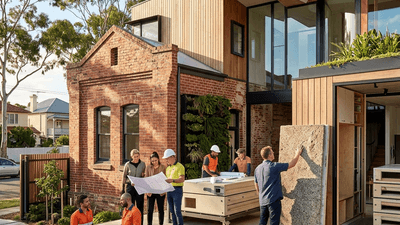
This ethos is beautifully articulated in Purcell’s recent insights into Sydney’s heritage, which frames adaptive reuse not merely as historical preservation, but as the cornerstone of a circular economy. The firm highlights the adaptive reuse of a 19th-century government building in Sydney as a prime example of how historic structures can be retrofitted for modern utility while retaining their embodied carbon.
"Heritage architecture offers a ready-made blueprint for the circular economy. By viewing existing structures as material banks rather than demolition liabilities, we preserve cultural memory while drastically reducing our carbon footprint."
Navigating the Adaptive Reuse Challenge
For Australian architects, integrating heritage into the circular economy presents unique challenges. Upgrading 19th-century masonry for 21st-century thermal performance requires a delicate touch. It involves:
- Detailed Fabric Analysis: Understanding how historic materials breathe and manage moisture before applying modern insulation or HVAC systems.
- Reversible Interventions: Designing modern additions that touch the heritage fabric lightly and can be removed in the future without damaging the original structure.
- Material Salvage: Actively cataloging and reusing materials on-site, turning demolition into deconstruction.
Regional Identity: Tasmania's Context-Driven Design
While Sydney grapples with large-scale practice restructuring and colonial heritage, Australia's regional centers are quietly producing some of the most innovative, context-responsive architecture in the world. Tasmania, in particular, has become a proving ground for sustainable, timber-rich design that responds intimately to its rugged climate.
This regional excellence is currently on display at the 2026 Tasmanian Architecture Awards Launceston Exhibition. Hosted at the Brickworks Design Centre, the exhibition showcases 27 entered projects, offering a masterclass in localized architecture. What makes Tasmanian architecture so compelling to the broader Australian industry is its necessity-driven innovation. Isolated from major mainland supply chains and subject to a demanding climate, Tasmanian architects have long embraced passive design, local material sourcing, and modest footprints.
Comparing Practice Paradigms
To understand the trajectory of the profession, it is helpful to contrast the traditional practice model with the emerging future-ready model taking shape across these different contexts:
| Focus Area | Traditional Practice Paradigm | Future-Ready Practice Paradigm |
|---|---|---|
| Leadership | Hierarchical, founder-led, concentrated risk. | Distributed, matrix-based, specialized (e.g., DesignInc). |
| Sustainability | Focus on operational carbon in new builds. | Focus on embodied carbon and adaptive reuse (e.g., Purcell). |
| Design Ethos | Globalized aesthetics, standardized materials. | Hyper-local, climate-responsive, vernacular (e.g., Tasmanian Awards). |
The Path Forward for Australian Architecture
The convergence of these three trends—distributed operational leadership, a commitment to the circular economy through heritage, and a renewed respect for regional vernacular—paints a clear picture of where Australian architecture is heading. The profession is maturing.
For practice directors and architects, the lessons are clear. To thrive in the coming decade, firms must be internally agile, capable of managing complex, distributed teams. Externally, they must shift their mindset from 'creating the new' to 'stewarding the existing', finding innovative ways to adapt our built heritage. And finally, they must remain deeply connected to their local context, drawing inspiration from regional practices that understand how to build with, rather than against, the Australian landscape.
As we look toward the remainder of 2026 and beyond, the most successful practices will not necessarily be those that design the tallest towers, but those that master the intricate balance of robust business operations, ecological responsibility, and a profound sense of place.