
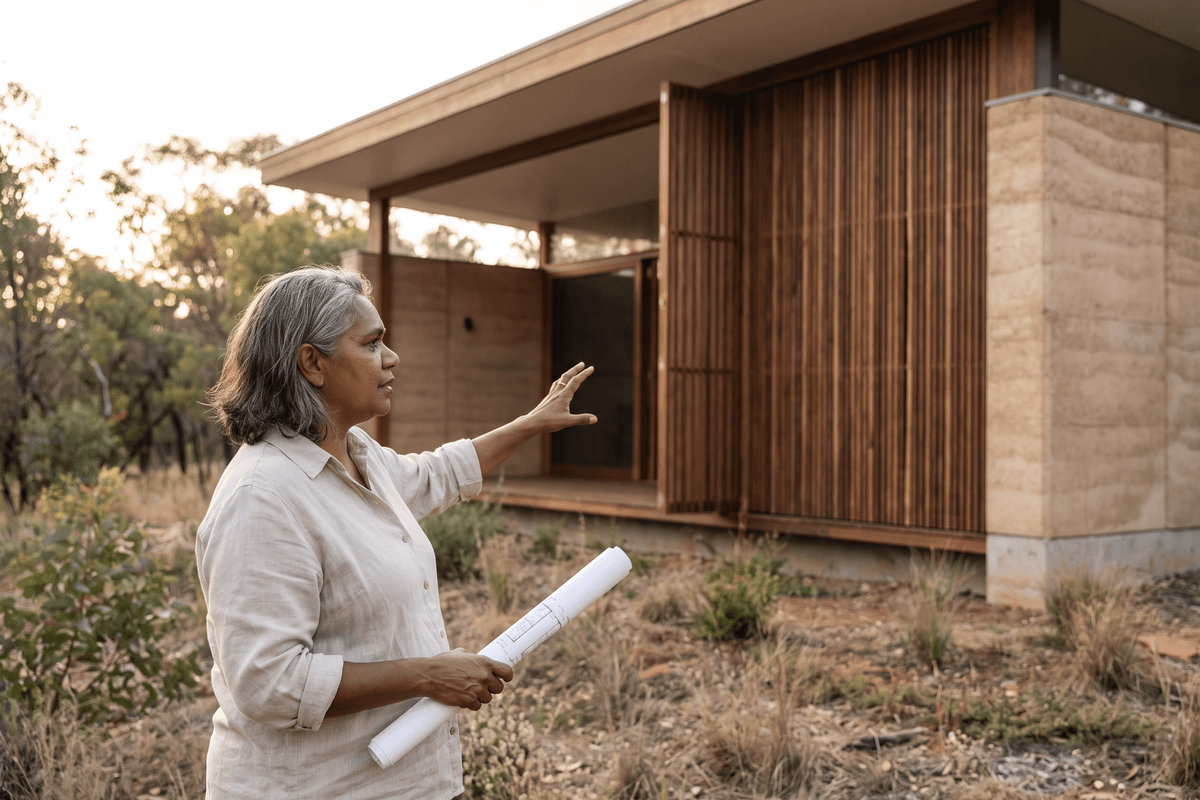



For decades, the metric of architectural success in Australia was largely defined by formal expression, spatial ingenuity, and visual impact. Today, that metric has fundamentally shifted. As we navigate the latter half of 2026, the industry's highest accolades and most significant institutional investments are pointing toward a singular, unified mandate: architecture must deliver profound social impact, deeply rooted in an understanding of Country and material ethics.
This shift is no longer on the fringes of our profession. It has moved to the very center of how we practice, procure, and celebrate the built environment. From remote Tasmanian homesteads to world-first academic institutes in Sydney, the message is clear: the future of Australian architecture is collaborative, culturally responsive, and intrinsically tied to the land.
Social Impact as the New Standard of Excellence
The most telling indicator of this industry-wide pivot is the recent announcement of the 2026 ArchitectureAu Award for Social Impact. The top honor was awarded to a deeply moving pavilion and homestead renewal situated on a highly significant site for Tasmania's Palawa people.
Described by the jury as a "profound architectural intervention," the project transcends traditional site-making. It serves as a physical mechanism for cultural reclamation, healing, and community gathering. For practitioners, this project exemplifies a critical lesson: architecture's greatest value often lies not in what it imposes on a site, but in what it facilitates for the people who belong to it.
"The Palawa pavilion demonstrates that true architectural excellence is achieved when design acts in service to cultural continuity and community resilience. It is a masterclass in listening before drawing."
Institutionalizing 'Designing with Country'
While award-winning projects provide inspiration, systemic change requires institutional frameworks. Historically, engagement with First Nations knowledge in Australian architecture has often been relegated to late-stage consultation or superficial aesthetic integration. That era is ending.
The University of Technology Sydney (UTS) has just launched a 'world-leading' Indigenous Institute for Designing with Country. Crucially, this institute is steered by First Nations designers and knowledge holders. Its mandate is to embed Indigenous methodologies into the core curriculum and research frameworks of spatial design.
Practical Implications for Firms
- Procurement Shifts: Government and tier-one commercial tenders increasingly require demonstrated, authentic engagement with Designing with Country frameworks.
- Methodological Overhauls: Firms must move away from "consultation as compliance" toward co-design processes led by First Nations voices from the project's inception.
- Talent Acquisition: Graduates emerging from programs like the new UTS institute will possess a highly sought-after fluency in cultural and spatial integration, forcing established practitioners to upskill.
Material Ethics: Growing Our Future Buildings
The ethos of Designing with Country inherently demands a more responsible approach to materials—a philosophy of taking only what is needed and ensuring that what is built can return to the earth without harm. This cultural shift is running parallel to a material revolution.
A new exhibition at the National Gallery of Victoria (NGV) in Melbourne is currently exploring how contemporary designers are turning to plants to replace petroleum-based plastics and high-carbon materials. The exhibition highlights a growing intersection between industrial design, biotechnology, and architecture.
For architectural professionals, the implications are immediate. The specification of plant-based bioplastics, mycelium acoustics, and engineered timber is moving from experimental pavilions into mainstream commercial fit-outs. This material transition is not just about reducing embodied carbon; it is about establishing a regenerative supply chain that aligns with the stewardship principles championed by First Nations communities.
The 2026 National Architecture Awards: A Litmus Test
As we look toward the culmination of the year's architectural achievements, the shortlists for the Australian Institute of Architects' 2026 National Architecture Awards offer a clear snapshot of where the market is heading.
The recently announced shortlists feature 14 homes across Australia (and one overseas) alongside 16 commercial and residential interiors. A close analysis of these contenders reveals several unifying traits that reflect our evolving national identity:
- Radical Restraint: Many shortlisted homes prioritize smaller footprints and high-performance envelopes over sprawling square meterage.
- Adaptive Reuse in Commercial Interiors: The interiors shortlist is dominated by projects that strip back and celebrate existing heritage fabrics rather than enforcing entirely new, resource-heavy fit-outs.
- Hyper-Local Materiality: There is a distinct move away from imported luxury finishes in favor of locally sourced timber, rammed earth, and bespoke elements crafted by regional artisans.
The Evolving Paradigm of Australian Practice
| Focus Area | Traditional Approach (Pre-2020) | The Emerging 2026 Paradigm |
|---|---|---|
| Cultural Engagement | Post-design consultation / tokenistic art integration | First Nations-led co-design from project inception (Designing with Country) |
| Material Specification | Globalized supply chains, high-carbon synthetics | Hyper-local sourcing, plant-based alternatives, regenerative materials |
| Residential Design | Maximizing footprint and visual monumentality | Radical restraint, climate resilience, and contextual modesty |
| Success Metrics | Aesthetic novelty and spatial efficiency | Social impact, cultural healing, and lifecycle carbon |
Looking Ahead: The Discourse Continues
The conversations sparked by these awards and institutional launches are not happening in a vacuum. Throughout August 2026, a robust calendar of industry events across Melbourne, Sydney, and Perth will continue to dissect these themes. From symposiums on circular economy interiors to site tours of new social housing models, the profession is actively recalibrating its knowledge base.
For Australian architects, the mandate for the rest of the decade is unmistakable. We are no longer just form-makers; we are custodians of materials, facilitators of social equity, and active participants in the ongoing story of Country. The firms that embrace this profound shift will not only design the award-winning projects of tomorrow—they will shape a more resilient and equitable Australia.